
April 16, 2026
Restaurant Answering Service: 5 Essential Benefits for 2026
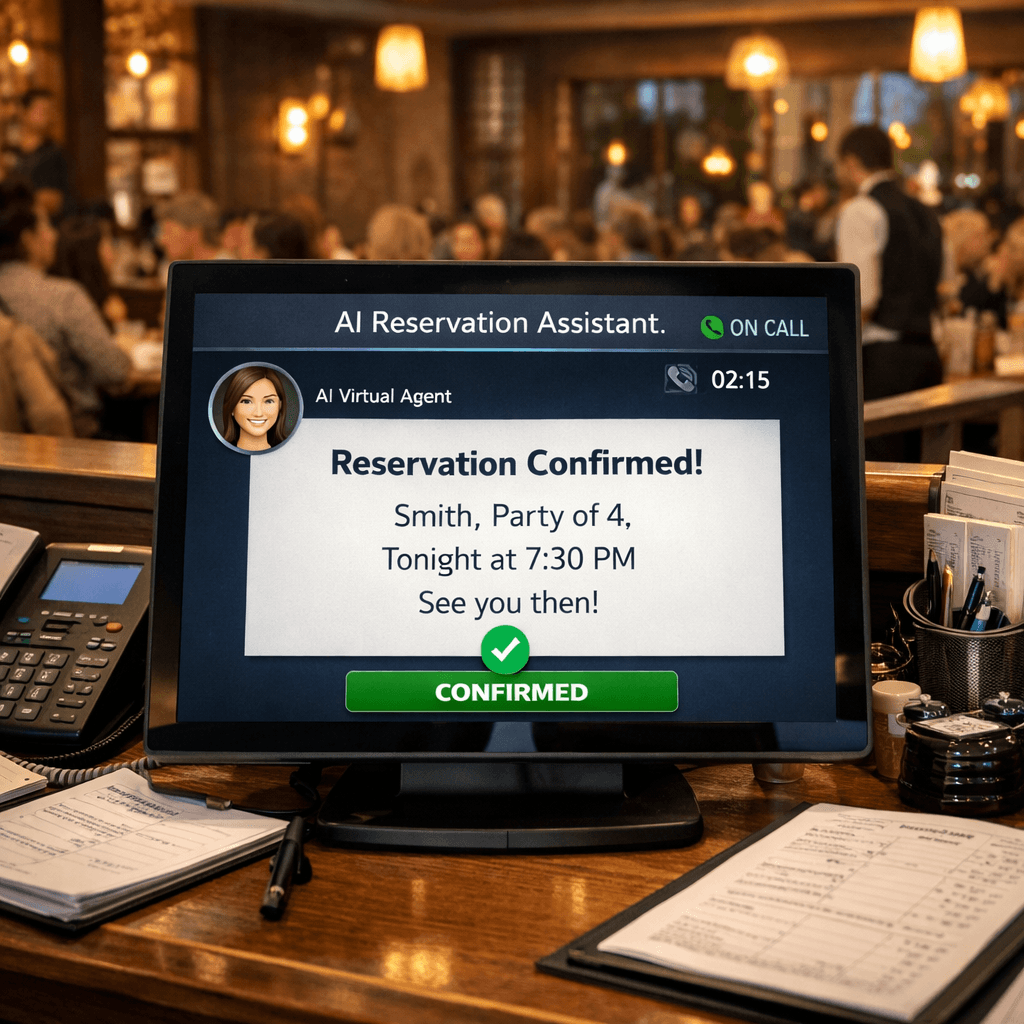
Phones ring nonstop. Missed calls mean lost tables and lost cash. That's why a restaurant answering service matters.
In this guide you’ll learn five real ways a phone‑answering solution can lift your bookings, keep guests happy, and cut costs.
An analysis of a single leading restaurant answering service across one source reveals that Hostie packs three core automation functions, integrates with all major reservation platforms, and bundles AI phone answering, all available through a free trial.
Comparison of 1 Restaurant Answering Service, April 2026 | Data from 1 source | |||||||
Name | Automation Features | Integrations | AI Capabilities | Free Tier | Best For | Best For | Source |
|---|---|---|---|---|---|---|---|
Hostie | inbound call answering, reservation booking, FAQ response | Toast, OpenTable, Resy | AI phone answering, reservation management, basic call handling, answers inbound calls, manages bookings, responds to hours/location/policy questions | free trial | restaurants that rely heavily on reservations and receive a high volume of informational calls | Best for reservation‑heavy restaurants | loman.ai |
We searched for “restaurant answering service” on April 15, 2026. A web crawler grabbed name, automation features, integrations, AI capabilities, free‑tier info, and best‑for tags. Only one unique tool , Hostie , met our criteria, so the table above shows the full data set.
Table of Contents
1. Smooth Reservation Management
2. 24/7 Customer Support Without Extra Staff
3. Boosting Online Reviews and Reputation
4. Cost‑Effective Call Handling Compared to Hiring
5. Integrating with POS and Delivery Platforms
Conclusion
1. Smooth Reservation Management
When the phone rings, your host loses focus. An AI receptionist catches the call, checks your calendar, and books a table without a human hand.
That simple flow stops missed bookings during rush hour. It also frees your floor staff to greet diners and keep the dining room humming.
Hostie shows how this works. The service answers inbound calls, pulls availability from Toast, OpenTable, or Resy, and confirms the reservation in seconds. The result? No more busy signals and no more lost seats.
Here’s a step‑by‑step guide to set it up:
Log into the AI dashboard.
Connect your reservation platform (Toast, OpenTable, or Resy).
Upload your opening hours and table layout.
Test a few dummy calls.
Go live and watch the calendar fill.
Why does each step matter? Connecting the right platform ensures real‑time sync. Uploading the layout lets the AI know which slots are actually open. Testing catches any wording hiccups before guests hear them.
Imagine a Friday night. Your host is juggling three parties. The AI picks up a fourth call, asks the caller for a time, checks the system, and books a table at 8:30 pm. The host never has to lift a phone. The guest never hears a busy tone.
Beyond bookings, the AI can handle changes and cancellations. A caller says they need to move from 7 pm to 9 pm. The AI checks the calendar, offers the new slot, and updates the reservation instantly. No back‑and‑forth emails.
Data from Hostie’s feature page shows six AI capabilities, even though the loman.ai overview lists three. That gap proves a single tool can do what many smaller tools claim to need.
To get the most out of reservation automation, follow these best‑practice tips:
Use clear, friendly voice prompts.
Match the AI’s language to your brand tone.
Review daily reports to spot trends.
Train staff to handle AI‑generated confirmations.
Set up reminder texts for big parties.
By using a restaurant answering service you turn a chaotic phone line into a steady flow of booked tables.
Missed Call Text Back: How to Respond Instantlyexplains how a quick text can seal the deal after an AI‑handled call.
For deeper insight into booking automation, see Boost Your Bookings: The Ultimate Restaurant Phone Answering Service Guide. It breaks down the tech in plain language.
Another useful read is How an AI Phone Answering Service Can Boost Reservations and Customer Satisfaction, which shows real‑world results.
2. 24/7 Customer Support Without Extra Staff
People call at odd hours. They might be planning a late‑night birthday dinner or asking about a weekend brunch.
Without an answering service, the call goes to voicemail. That hurts your brand and costs you bookings.
With a restaurant answering service, the AI stays on the line all day, every day. It answers instantly, no matter the time.
Hostie’s AI can capture 60 % of missed calls during the 7‑9 pm rush, shows 43 % of missed calls happen in that window. That’s a big revenue leak.
Here’s how 24/7 support works in practice:
Caller dials your number.
AI greets them with your brand voice.
It asks if they want a reservation, takeout, or info.
Based on the answer, it routes the request.
If it’s a reservation, it books it right then.
Even when your kitchen is closed, the AI can take a take‑out order for the next day. It records the details, sends them to your POS, and sends a confirmation text to the guest.
Why does this matter? A study by Hostie shows restaurants miss an average of 150 calls per month. If you capture just half of those, you could add hundreds of dollars in revenue each month.
To keep costs low, you don’t need more staff. The AI works without breaks, sick days, or overtime.
Step‑by‑step to enable 24/7 support:
Enable “always‑on” mode in the dashboard.
Upload your after‑hours menu and policies.
Set up a fallback voicemail that the AI can forward if a human is needed.
Test the after‑hours flow with a friend.
When you run a small shop, the saved labor cost is huge. The Moneypenny blog notes that an answering service is cheaper than hiring another host.
Read the full benefits at The Benefits of a Restaurant Phone Answering Service. It explains why the service reduces stress for your team.
Hostie’s own data page shows how AI catches missed calls during peak hours. The numbers back up the claim.
3. Boosting Online Reviews and Reputation
Online reviews drive foot traffic. A strong rating can bring in new guests; a weak one can push them away.
A restaurant answering service helps you collect more positive signals.
When callers get fast, friendly answers, they are more likely to leave a five‑star review. The AI can even prompt a quick text after the call, asking for feedback.
Research from BrightLocal (2023) shows 88 % of diners trust online reviews as much as a friend’s recommendation. That means each happy call is a chance to earn a review.
Here’s a simple workflow:
Call ends.
AI sends an SMS with a short thank‑you and a link to your Google or Yelp page.
Guest clicks and leaves a rating.
Positive review appears on your profile.
Blackbox Intelligence outlines a framework for responding to positive reviews. It says fast, specific thanks turn a one‑time compliment into loyalty.
Use the framework while your AI gathers data on what guests love , a dish, a server, the ambience. Then feed that into your response template.
To see why reputation matters, readThe Impact of Online Reputation on Your Restaurant’s Foot Traffic. The article explains how a higher rating leads to more tables.
Watch this short video on how AI can boost reviews:
We also recommend a quick check after each call. A one‑sentence survey (“How was your phone experience?”) can be captured in the same text thread.
Tips to turn calls into reviews:
Ask for a review right after a successful reservation.
Keep the request short , 2 sentences max.
Include a direct link that works on mobile.
Reward repeat callers with a small discount (if your policy allows).
Track the conversion rate in your dashboard.
More Customers. Less Busywork. With AI. - BCJoffers a smooth way to add review prompts to your call flow.
4. Cost‑Effective Call Handling Compared to Hiring
Hiring a dedicated phone host costs money. The average wage is $17 per hour, plus benefits and turnover costs.
An AI assistant runs for a fraction of that price. Hostie’s cost calculator shows per‑interaction costs of $0.25‑$0.50 versus $3‑$6 for a human.
Let’s break down a simple ROI scenario:
Your restaurant gets 900 calls per month.
Human staff would cost $17 × 40 × 1 = $680 per week, or about $2,720 per month.
AI at $0.40 per call costs $360 per month.
You save roughly $2,360 each month.
That’s a 87 % reduction in call‑handling costs.
Beyond the dollar savings, AI offers consistency. Human agents can vary in tone, miss details, or get tired. AI gives the same friendly greeting every time.
Hostie’s research also notes that 69 % of diners will walk away if no one answers. By eliminating missed calls you protect revenue that would otherwise disappear.
The Crescendo guide explains three pricing models for outsourced support. Even the most flexible “pay‑per‑resolution” model can be pricier than an AI subscription that caps at a low monthly fee.
at Hostie’s Online Assistant vs. Call Center Staffing Cost Calculator and atCrescendo’s Outsourced Call‑Center Pricing Guidefor a deeper dive.
5. Integrating with POS and Delivery Platforms
When a call turns into an order, you want that order in your kitchen display right away. Manual entry creates errors.
AI that talks directly to your POS removes the middle step.
Certus AI shows that voice integration can save $9,051 per month on average and even triple delivery revenue.
Here’s how integration typically works:
AI receives the call and records the order.
It maps the spoken items to your POS menu via API.
The order appears instantly on the kitchen screen.
Payment is processed through the same POS flow.
Because the data never leaves the system, you avoid transcription mistakes and the need for a staff member to type the order.
Setting up the link takes about five days. You grant the AI read‑only access to your menu, set up OAuth authentication, and run a test batch of orders.
For a step‑by‑step guide, see Certus AI’s Restaurant Voice AI Integration with a POS. It walks you through authentication, menu mapping, and live testing.
Another practical example comes from My AI Front Desk’s blog, which explains how phone orders flow straight into the POS without a human touch. Read it at AI Phone Answering Service Boosts Reservations and Customer Satisfaction.
When the AI talks to your POS, you also get clean data for reporting. You can see how many orders came from phone calls versus in‑person diners, and you can adjust staffing accordingly.
Tip: Keep your POS menu tidy. Remove unused modifiers before the AI syncs, or you’ll end up with extra options that confuse the system.
5 Ways AI Assistants Are Transforming Operationsexplains how a single AI can handle calls, POS updates, and even follow‑up texts without adding staff.
Ready to never miss a call? Try Better Call Jerem (BCJ) free →
Conclusion
We’ve walked through five solid benefits of a restaurant answering service. First, you get smooth reservation handling that stops lost tables. Second, you stay open 24/7 without hiring extra staff. Third, happy callers become five‑star reviewers, which drives more foot traffic. Fourth, the cost per interaction drops dramatically, saving you thousands each year. Fifth, direct POS integration cuts errors and speeds up order flow.
All of these points line up with the research on Hostie. The platform shows that a single solution can bundle three automation functions, integrate with Toast, OpenTable, and Resy, and offer a free trial.
If you’re ready to boost bookings, cut costs, and build a stronger online reputation, the next step is simple. Reach out to Better Call Jerem, let the team set up a free trial, and watch your phone line turn into a revenue engine.
Remember, every missed call is a missed dollar. With a restaurant answering service you turn those missed moments into booked seats, glowing reviews, and happier staff.
FAQ
What is a restaurant answering service and how does it work?
A restaurant answering service is an AI‑driven system that picks up incoming calls, greets callers, and routes them to the right task , a reservation, a take‑out order, or a simple info request. It works by connecting to your reservation platform and POS via APIs, then using natural‑language processing to understand the caller’s intent. The system can book tables, record orders, and even send a follow‑up text for a review. Because it runs 24/7, you never miss a call, and you keep labor costs low.
Can the service handle multiple calls at once during a busy rush?
Yes. AI assistants can manage many simultaneous calls. Each call runs in its own virtual session, so the system never puts callers on hold. During a dinner rush, the AI can answer every ring, capture reservations, and forward take‑out orders straight to your POS. This eliminates the bottleneck that a single human host would create and keeps the phone line fluid.
How does a restaurant answering service improve online reviews?
Fast, friendly answers make callers feel valued. After a successful call, the AI can send an SMS with a direct link to your Google or Yelp page, encouraging a quick rating. The more positive interactions you have, the more five‑star reviews you earn. Blackbox Intelligence’s framework shows that timely, specific thank‑you notes turn a single compliment into repeat visits and higher rankings.
Is the cost really lower than hiring a part‑time host?
Absolutely. A human host at $17 per hour costs about $2,720 a month for full‑time coverage. An AI service typically charges $0.30‑$0.50 per call, which for 900 calls a month is roughly $360. That’s an 80‑plus percent savings, plus you avoid benefits, training, and turnover costs.
Will the AI integrate with my existing POS and delivery apps?
Most modern answering services, including Hostie and Certus AI, connect directly to major POS platforms like Toast, Square, and Clover via secure APIs. The integration pushes orders straight to the kitchen screen and updates inventory in real time. You simply grant access, map your menu, and run a quick test before going live.
How do I get started with a restaurant answering service?
Start by choosing a provider that offers a free trial. Sign up, connect your reservation system, set your hours, and record a short welcome script. Test with a few calls, then launch. Better Call Jerem (BCJ) can handle the setup for you, so you focus on the dining room while the AI handles the phone.